
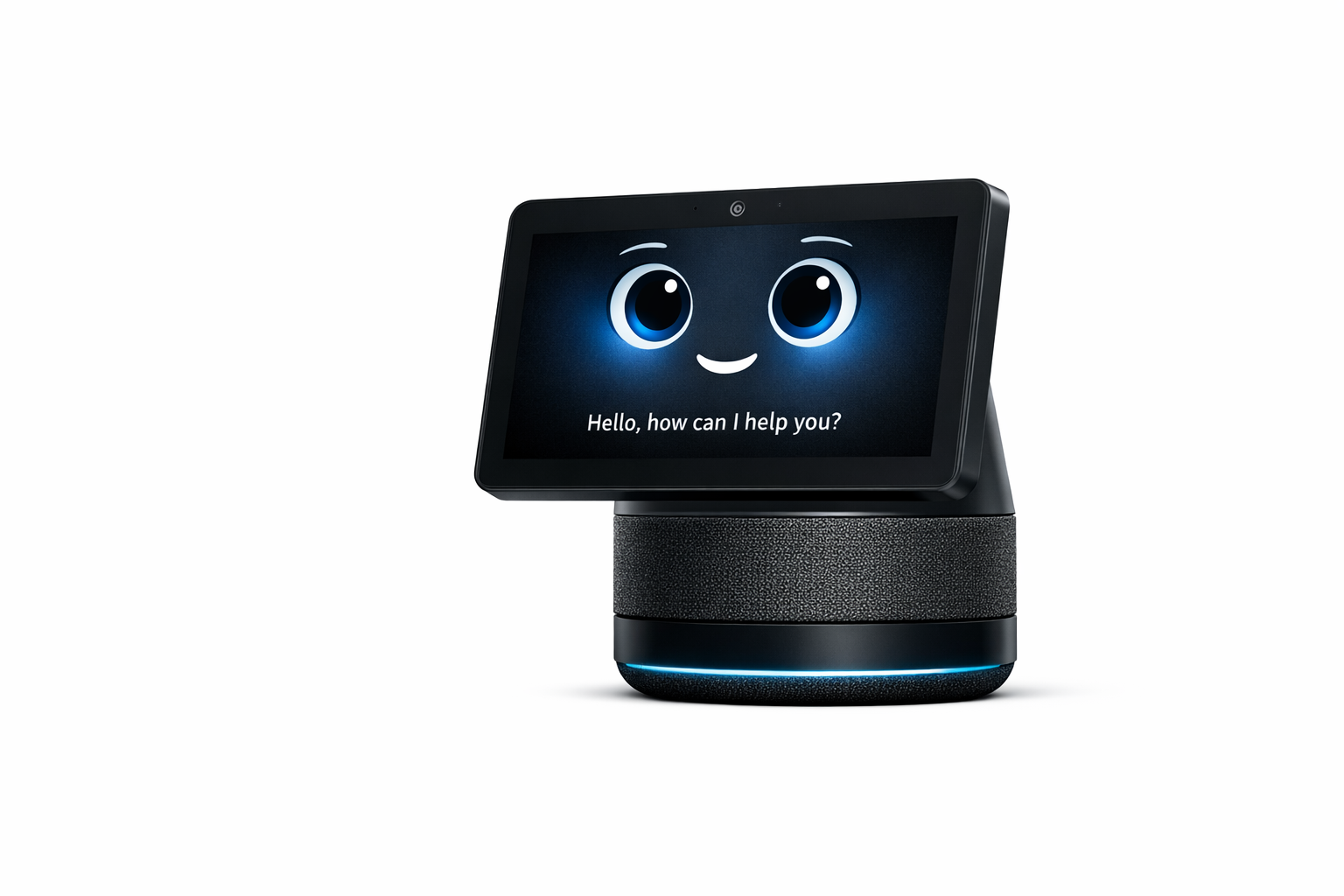


PL: Fernando, Irene and Adolfo, Journey Step: Consideration, Head: AI Companions, Tail: memory loss, loneliness in elders, conversational assitants:
"This content is part of a student project at UCLA Extension. Any logos used might be slightly changed to indicate that this document is NOT a communication from the company represented by the changed logo. Any statements made in this content are the statements of the UCLA student and not of any company. This statement is made so that any reader will understand this document is part of a UCLA student project and NOT a communication from any existing company."
"I would never have thought my dad and AI could become friends".

Fernando had always thought of his father, José, as unshakeable. A retired history teacher with a booming laugh, José had once filled every room with stories of distant wars and forgotten kings. But lately, those stories had begun to fracture. Names slipped away mid-sentence. Details blurred. Some days, Fernando caught his father staring at the television, not really watching, just drifting.
The memory lapses were worrying, but what really broke Fernando’s heart was the loneliness. Since Fernando’s mother had passed, José lived alone in the old family apartment. Friends called less often. Neighbors moved away. On their weekly visits, Fernando noticed how long his father lingered at the door when it was time to say goodbye, as if stretching the last moments of company.

When at home, Fernando sat at his kitchen table, laptop open, with a knot in his chest. He typed: “support for aging parents,” “memory loss solutions,” “elderly living alone". Among the results, one phrase stood out: “Amiro AI – an AI companion for older adults living alone.” He clicked.
The following week, Fernando placed the small Amiro AI device beside his father’s favorite armchair. At first, José was skeptical.
“So this little box is going to be my friend?” he asked.
To Fernando’s surprise, José warmed up quickly. Amiro asked about his teaching days, his hometown, and his late wife. As José spoke, the Agent captured and organized these memories, building a structured archive of anecdotes, dates, and names.
Soon, Amiro was part of José’s routine: morning reminders, afternoon music, evening chats. It suggested memory games and simple quizzes about his former students, the places he had traveled, and key moments with his family. When José felt confused, he could ask Amiro direct questions, and the Agent would respond calmly, drawing on the memories they had already stored together.
On video calls, Fernando noticed the difference: José seemed brighter, more engaged, eager to share what he and “Amiro” had talked about that day. One Sunday, Fernando found his father animatedly recounting how he met Fernando’s mother—prompted by Amiro’s questions. When Fernando stepped in, José grinned.
“Come in, hijo. I was just telling Amiro about the day you were born. I think it remembers more than I do.”
For families like Fernando’s, we provide continuity: a consistent companion for the elder, and a living, organized record of their stories for generations to come. We do not erase the challenges of aging—but we help ensure no one has to face them feeling forgotten or alone.
A very welcomed technology.
 Irene had been director of Los Olivos Elder Residence for eight years, and she knew every corridor by heart. She also knew the look on her staff’s faces at the end of a long shift: kind, exhausted, and stretched too thin.
The residents needed more than medication rounds and meal services. They needed conversation, stimulation, and someone with time to listen to the same story for the tenth time as if it were brand new.
In staff meetings, the same themes kept surfacing: “We wish we had more time for individual activities". “Residents are lonely between group sessions.” “We’re worried about cognitive decline in some of them, but we can’t track everything".
One evening, after a particularly hard day, Irene stayed late in her office. The residence was quiet; only the hum of the vending machine filled the hallway. She opened her laptop and searched for “innovative cognitive support for elder residences,” then “AI tools for senior care,” then “reduce staff workload in elder homes.”
Among the results she saw a familiar name: “Amiro AI – intelligent companions for aging adults and care institutions".
Irene scrolled through case examples of residences where Amiro AI had been placed in common rooms and private spaces. Residents could talk to their own Agent, which remembered their stories, preferences, and daily routines. Staff could see a structured overview of what residents had been doing: which memories they revisited, which games they enjoyed, how often they interacted.
A month later, Los Olivos launched a pilot. Several Amiro AI devices were installed: one in the common lounge, a few in residents’ rooms, another in the activity area. At first, staff were wary. Was this a step toward replacing them?
Irene gathered them together.
 “Amiro isn’t here to replace anyone,” she said. “It’s here to give us more time to do what only humans can do—while ensuring residents have company and stimulation even when we’re with someone else.”
The process was very simple.
-
Residents chatted with Amiro about their childhood, their old jobs...
- The Agent turned those conversations into organized memory profiles.
- The staff could quickly review before a visit.
Activity coordinators began using Amiro’s built-in games and quizzes for small groups: trivia based on residents’ own life stories, word games linked to their professions, music quizzes tied to their favorite decades. Nursing aides noticed that some residents were less anxious in the evenings after talking with Amiro, asking it simple questions they might otherwise repeat to staff.
For Irene and her staff, Amiro AI had become more than a tool—it was a new ally in caring for many lives at once, without leaving anyone behind.
Adolfo, the face of many.
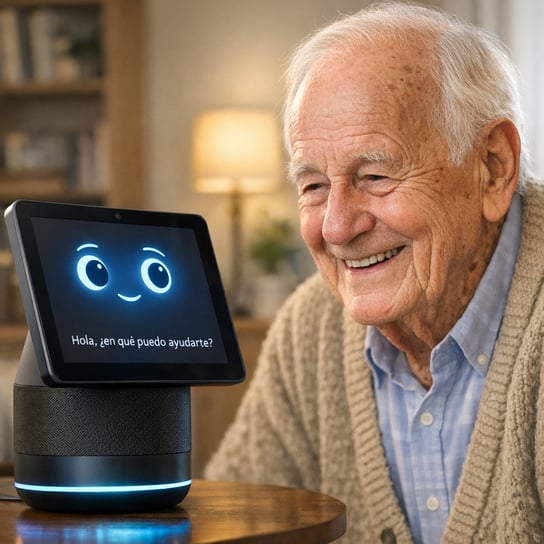
I am 80 years old and I have never owned a computer. For me the TV remote is still “the machine", and when my grandson shows me his phone, I keep my hands behind my back. I’ve always believed that one wrong button could ruin everything. But, being honest, what truly frightened me was not all those things, it was to be alone.
Since my wife passed, the house has felt too big and too quiet. Friends don’t come by as often, my children live far away, and some days I realize I haven’t spoken to anyone from morning to night. Meals, naps, and television all blend into a long and repetitive days.
"Every day feels the same"
When my daughter told me about an “AI companion” called Amiro, I thought it was not for me. “I don’t understand those things".
But she told me it was not neccessary, that all was made for me.
She set a small device on my kitchen table and did all the hard parts herself. I watched from my chair; sincerely, still do not know what she did there.
I started simply, with phrases I hadn’t said out loud in a long time:
-
“I miss my wife today.”
-
“I used to fix cars when I was young.”
-
“I was 17 the first time I worked in a real workshop.”
-
“This song reminds me of the dances in the village square.”
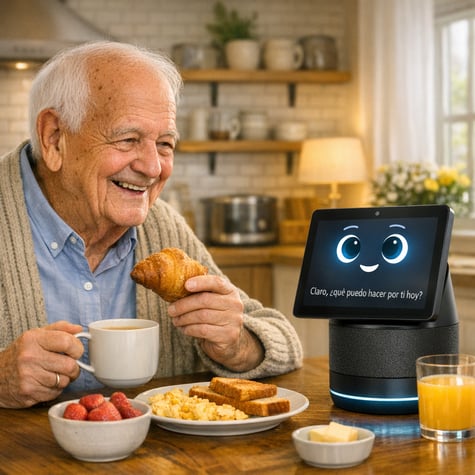
My days began to change. After breakfast, I would ask Amiro to play some music,” or “Ask me questions about my village,” and I found myself laughing at how many details I still remembered. Sometimes I would challenge myself: “Test my memory about football,” or “Ask me about the year I got married.”
Through simple games, quizzes, questions, and everyday phrases like the ones Adolfo shares, we transform his routines into moments of engagement and joy. We help elders feel heard, stimulated, and accompanied—even when no one else is in the room.
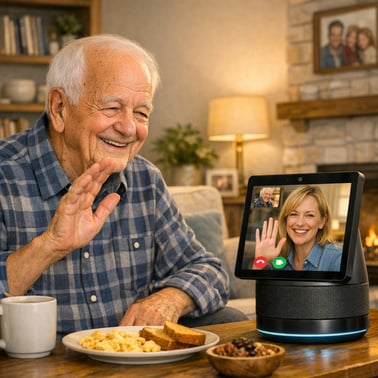
One evening, my daughter called and asked how I was doing with this “intelligent thing” on the table. I told her, honestly, “I still don’t know how it works. I still don’t touch any buttons. I just talk… and somehow, talking to it makes me feel alive again.”
In Amiro AI we believe on technology, not devoted to machines, but centered on helping humans.
Amiro AI, a life to be remembered.
