

AI

Somehow, eating healthy has become confusing.
There’s always a new rule, a new trend, or a new “right way” to do it. One day it’s low-carb, the next it’s high-protein, then suddenly snacks are either “good” or “bad” depending on who you ask.
And in the middle of all that, you’re just trying to get through your day without feeling tired, distracted, or constantly hungry.
The truth is, for most people, the issue isn’t effort—it’s clarity.
You don’t need more information. You need options that actually fit your life.

Most people focus on main meals—breakfast, lunch, dinner.
But what really affects your energy, focus, and consistency are the in-between moments.
These are the moments where things usually fall apart.
You’re busy. You’re hungry. You don’t have time to think.
So you grab whatever’s easiest.
The problem isn’t that snacks are “bad.” It’s that most of them aren’t designed to support your energy.
Here’s what usually happens:
So even if it feels like you’re eating throughout the day, your body isn’t actually getting what it needs.
A good snack shouldn’t just “hold you over.” It should support your day.
At a minimum, it should:
And most importantly—it should feel simple.
Not something you have to plan your entire day around
Part of the problem is that healthy eating is often presented as something extreme.
But real life doesn’t look like that.
You have busy days. Unexpected plans. Moments where you just need something quick and reliable.
That’s where small, practical choices matter more than perfect ones.
Improving your snacks is one of the easiest ways to feel better throughout the day—without changing everything else.
You don’t need to overhaul your entire diet.
You just need better go-to options for those in-between moments.
Because when those moments are covered:
And that consistency adds up.
Healthy eating doesn’t need to be complicated.
It just needs to work for you.
If you’re looking for a simple place to start, focus on the small things—the choices you make when you’re busy, hungry, and don’t have time to overthink.
That’s where the real difference happens.
If you want a few easy, practical ideas you can actually use in your daily routine:
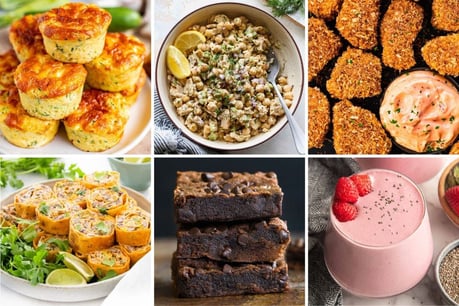
Download our free guide: “5 High-Protein Snacks for Busy Days”
Inside, you’ll find simple snack options that are:
No complicated plans—just options that fit into real life.
"This content is part of a student project at UCLA Extension. Any logos used might be slightly changed to indicate that this document is NOT a communication from the company represented by the changed logo. Any statements made in this content are the statements of the UCLA student and not of any company. This statement is made so that any reader will understand this document is part of a UCLA student project and NOT a communication from any existing company."