


Buyer Persona 2 (Daniel Vega - Sustainability-Centered Vegan) - Stage (Awareness)
Keywords: sustainable vegan snacks, eco-friendly protein bars
Choosing vegan snacks is often seen as a sustainable choice—but is it always?
For many people committed to a plant-based lifestyle, sustainability goes beyond avoiding animal products. It’s about making decisions that align with environmental values at every level: what you eat, how it’s produced, and the impact it leaves behind. Food becomes more than fuel; it becomes a daily expression of ethics and responsibility.
Yet as the plant-based market expands and new products appear on shelves every week, it’s getting harder to know which options are truly better for the planet. Shoppers are faced with protein bars wrapped in leaves on the package design, earthy color palettes, and buzzwords like “clean,” “natural,” and “eco” that suggest sustainability without clearly proving it. In a busy grocery aisle or while scrolling online, it’s easy to assume that if something is vegan, it must also be environmentally responsible.
However, that assumption can be misleading. A snack can be 100% plant-based and still depend on ingredients linked to deforestation, intensive monocropping, or high water consumption. It might rely on ultra-processed components that require substantial energy to produce, be wrapped in packaging that will sit in landfills for decades, or be shipped halfway across the world before it reaches your hands. In other words, “vegan” tells you what is not in the product—but it does not automatically tell you how that product affects the planet.
So what actually makes a vegan snack eco-friendly?
The Assumption: Vegan Equals Sustainable
At first glance, vegan snacks appear to be an environmentally responsible choice. After all, plant-based foods generally require fewer resources than animal-based products.
But sustainability is more complex than just ingredients.
A product can be vegan and still:
-
Use ingredients linked to deforestation
-
Rely on highly processed components
-
Be packaged in non-recyclable materials
-
Travel long distances, increasing its carbon footprint
This means that while veganism is a step in the right direction, it doesn’t automatically guarantee a low environmental impact.
Looking Beyond the Label
Many brands position their products as sustainable without providing meaningful transparency. Terms like “eco-friendly” or “all-natural” are often used as marketing tools rather than measurable claims.
To truly evaluate sustainable vegan snacks, it’s important to go deeper than the front of the packaging.
Consider questions like:
-
Where do the ingredients come from?
-
How are they grown or sourced?
-
What kind of packaging is used?
-
How much processing is involved?
Understanding these factors helps separate genuinely sustainable options from those that simply appear that way.
Ingredient Sourcing: The Foundation of Sustainability
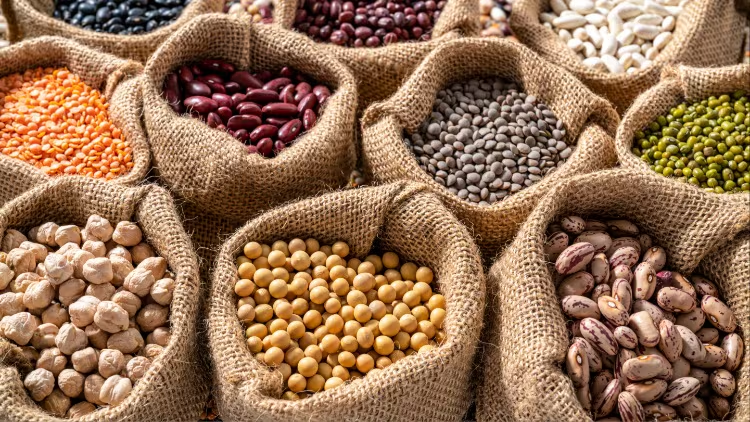
The first step in evaluating any vegan snack is its ingredients. Before considering packaging, branding, or convenience, it is essential to understand what goes into the product and how those components are brought into existence. Ingredient sourcing sits at the core of a snack’s environmental footprint because it shapes everything that follows: land use, water consumption, energy demands, transportation, and even labor conditions.
Not all plant-based ingredients have the same environmental impact. Some require more water, land, or energy to produce, while others are more efficient and regenerative.
Key considerations include:
-
Local vs imported ingredients: Locally sourced ingredients often have a lower carbon footprint due to reduced transportation. Shorter supply chains can mean fewer emissions from transportation, less reliance on long-haul trucking or air freight, and more transparency about where and how ingredients are produced.
-
Agricultural practices: Organic, regenerative, or ecological farming methods typically emphasize soil health, biodiversity, and reduced reliance on synthetic pesticides and fertilizers. These approaches can help build carbon-rich soils, support pollinators, and improve resilience to drought and climate variability.
-
Resource intensity: Some crops require significantly more water or energy than others. For example, almonds and certain tree nuts are known for their higher water demands, particularly in drought-prone regions. Pea protein and some legumes, on the other hand, can fix nitrogen in the soil, reducing the need for synthetic fertilizers and often performing better from a resource perspective.

While nuts and plant proteins are common in snacks, their environmental impact can vary depending on how and where they are produced. An almond grown in a water-stressed region using intensive irrigation has a different footprint from a peanut grown in a rain-fed system, or a sunflower seed harvested from a farm that practices crop rotation and soil conservation. Similarly, pea protein sourced from diversified farms with regenerative practices may be more sustainable than soy protein tied to deforested land. Two bars may both list “plant protein” on the label, but the underlying sourcing story can tell you far more about which option truly aligns with your environmental values.
Processing: When “Plant-Based” Becomes Industrial
Another factor often overlooked is the level of processing involved.
Highly processed vegan snacks may include refined ingredients, additives, or artificial components that increase their environmental footprint. Processing requires energy, water, and infrastructure, all of which contribute to a product’s overall impact.
This doesn’t mean all processed foods are bad—but it highlights the importance of balance.
Sustainable plant-based snacks tend to prioritize:
- Simpler ingredient lists
- Minimal processing
- Transparency about production methods
The more steps involved in creating a product, the more resources it typically consumes.
Packaging: The Most Visible Impact
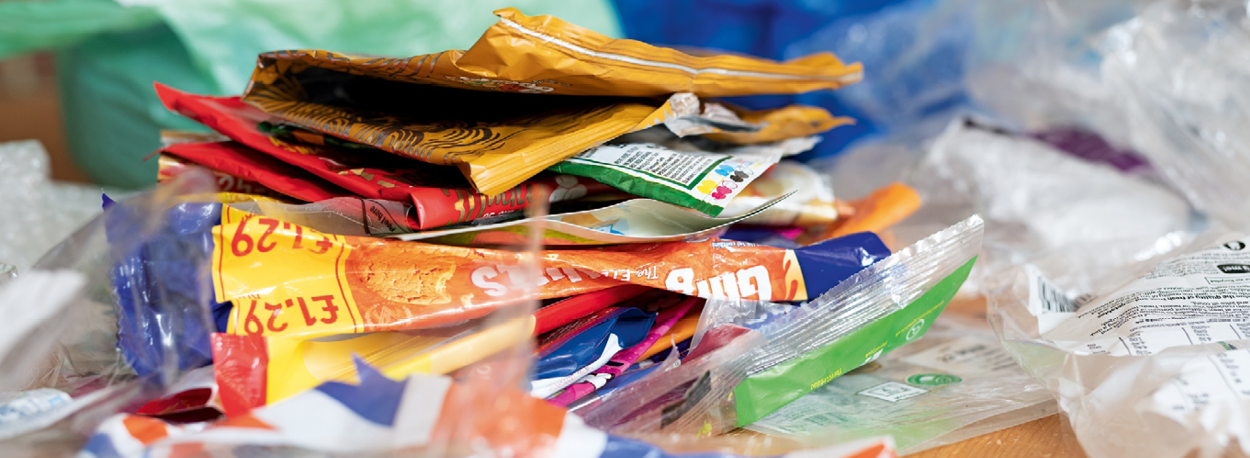
Packaging is often the most obvious—and sometimes the most problematic—aspect of a snack’s sustainability. It is the first thing you see on the shelf and the last thing you dispose of, which makes it a powerful signal of a brand’s values, but also a major contributor to waste and emissions if not designed thoughtfully.
Many convenient snacks, including eco-friendly protein bars, rely on single-use packaging that is difficult to recycle. Even when packaging looks environmentally friendly, it may not actually be compostable or recyclable in practice.
When evaluating packaging, consider:
-
Whether it is recyclable, compostable, or biodegradable. Look for clear, credible information about how the material should be handled at the end of its life.
-
If it uses minimal material. Sometimes the most sustainable choice is simply less packaging. This might mean smaller wrappers, reduced layers, or designs that avoid unnecessary boxes or inserts.
-
Whether the brand provides clear disposal instructions. Transparent brands guide you through what to do with the wrapper once you are finished with the snack.
Sustainable packaging is not just about materials—it’s about real-world usability and impact.
Transportation and Carbon Footprint
The journey from production to consumption also plays a significant role.
Snacks that rely on globally sourced ingredients or long supply chains may carry a higher carbon footprint due to transportation emissions.
While global trade is often necessary, there is growing awareness around:
-
Supporting brands that prioritize local sourcing
-
Reducing unnecessary transportation distances
-
Choosing products with more efficient supply chains
Even small differences in sourcing and distribution can significantly affect environmental impact over time.
The Problem of Greenwashing
As sustainability becomes more important to consumers, many brands adopt environmentally friendly messaging without fully backing it up. This practice, known as greenwashing, occurs when a company spends more effort on marketing itself as “green” than on actually reducing its environmental impact. In the context of vegan snacks and eco-friendly protein bars, greenwashing can blur the line between genuinely responsible products and those that only appear sustainable at first glance.
 Common signs include:
-
Vague claims like “eco,” “natural,” or “green” without evidence
-
Lack of transparency about sourcing or production
-
Emphasis on one sustainable aspect while ignoring others
-
Overly aesthetic branding that distracts from substance
Being aware of greenwashing helps you make more informed decisions and avoid misleading products.
Balancing Sustainability and Practicality
While sustainability is important, it also needs to fit into real-life routines.
Convenience matters. Snacks are often chosen because they are easy to carry, quick to consume, and accessible during busy days.
This creates a challenge: how to balance environmental responsibility with practicality.
Sustainable vegan snacks should ideally:
-
Be easy to integrate into daily routines
-
Provide nutritional value
-
Align with environmental values
-
Offer transparency and trust
Finding this balance is not always straightforward, but awareness is the first step.
Why This Matters More Than Ever
The demand for sustainable products is growing, especially among individuals who prioritize environmental impact in their daily choices.
However, as demand increases, so does the responsibility to choose carefully.
Every purchase contributes to resource consumption, production practices and industry standards.
Understanding what makes a snack truly eco-friendly allows you to support brands that align with your values and encourage more responsible production across the market.
What to Pay Attention to Moving Forward
At this stage, the goal is not to immediately choose a product—but to build awareness.
When evaluating sustainable plant-based snacks, focus on:
-
Ingredient sourcing and agricultural impact
-
Level of processing involved
-
Packaging materials and disposal
-
Transparency from the brand
-
Overall environmental footprint
These factors provide a more complete picture than any single label or claim.
Sustainability Is More Than a Label
Not all vegan snacks are created equal when it comes to environmental impact.
While plant-based products are often a step toward sustainability, true eco-friendliness requires a deeper look at sourcing, production, packaging, and transparency.
By understanding these elements, you can move beyond surface-level claims and make more informed decisions.
Because sustainability is not just about what a product is—it’s about how it’s made, how it’s delivered, and the impact it leaves behind.