
LH - Resistance Training: Staying Strong and Independent After 60
Buyer persona: Woman aged 60+, focused on healthy aging, mobility, bone health, and independence.
Buyer's Journey Stage: Awareness
Target Keywords: Healthy ageing for women, strength after 60, bone and muscle health for seniors.
You're Not Alone...
Many women in their 60s begin asking new questions about their health. Not questions about appearance or performance; but about living well.
- How do I stay strong as I age?
- How do I protect my bones and joints?
- How do I keep doing everyday things without fear or discomfort?
These questions are natural. Aging brings change, but it does not have to mean losing strength, confidence, or independence. With the right support, the body can remain capable and resilient well into later life.
This article looks at what changes after 60, why strength matters, and how simple movement supports healthy aging.
What Changes?
As we age, the body naturally goes through physical changes. Many women notice:
- Gradual muscle loss
- Reduced bone density
- Stiffer joints
- Slower balance reactions
- Lower energy levels
These changes are common, but they are not fixed. The body continues to respond to movement and use, even later in life.
The key shift after 60 is not avoiding movement; but choosing the right kind of movement.
Why is Strength Important?
Strength plays a bigger role in daily life than many people realise. It supports simple but important actions like:
- Standing up from a chair
- Carrying groceries
- Walking on uneven ground
- Maintaining good posture
- Catching yourself if you stumble
When strength declines, everyday tasks can start to feel harder or less stable. Supporting muscle health helps women stay confident and capable in their day-to-day lives.
Bone Health
Bone health becomes especially important for women after menopause. Hormonal changes can lead to lower bone density, increasing the risk of fractures. This matters because:
- Fractures can take longer to heal later in life
- Falls can affect long-term independence
- Recovery often limits mobility
Bones stay healthier when they are gently challenged. Safe, weight-bearing movement encourages bones to remain strong without placing them under unnecessary stress.
Movement Helps
Movement supports healthy aging in many ways beyond strength alone.
Regular activity can improve:
- Circulation and heart health
- Joint mobility
- Balance and mobility
- Balance and coordination
- Energy levels
- Mood and confidence
The goal is consistency, not intensity. Movement that feels safe and sustainable is far more effective than pushing too hard.
Types of Movement
The goal is consistency, not intensity. Movement that feels safe and sustainable is far more effective than pushing too hard.
- Walking or gentle cardio for heart health
- Stretching to maintain flexibility
- Balance focused movements
- Light resistance training to support muscles and bones
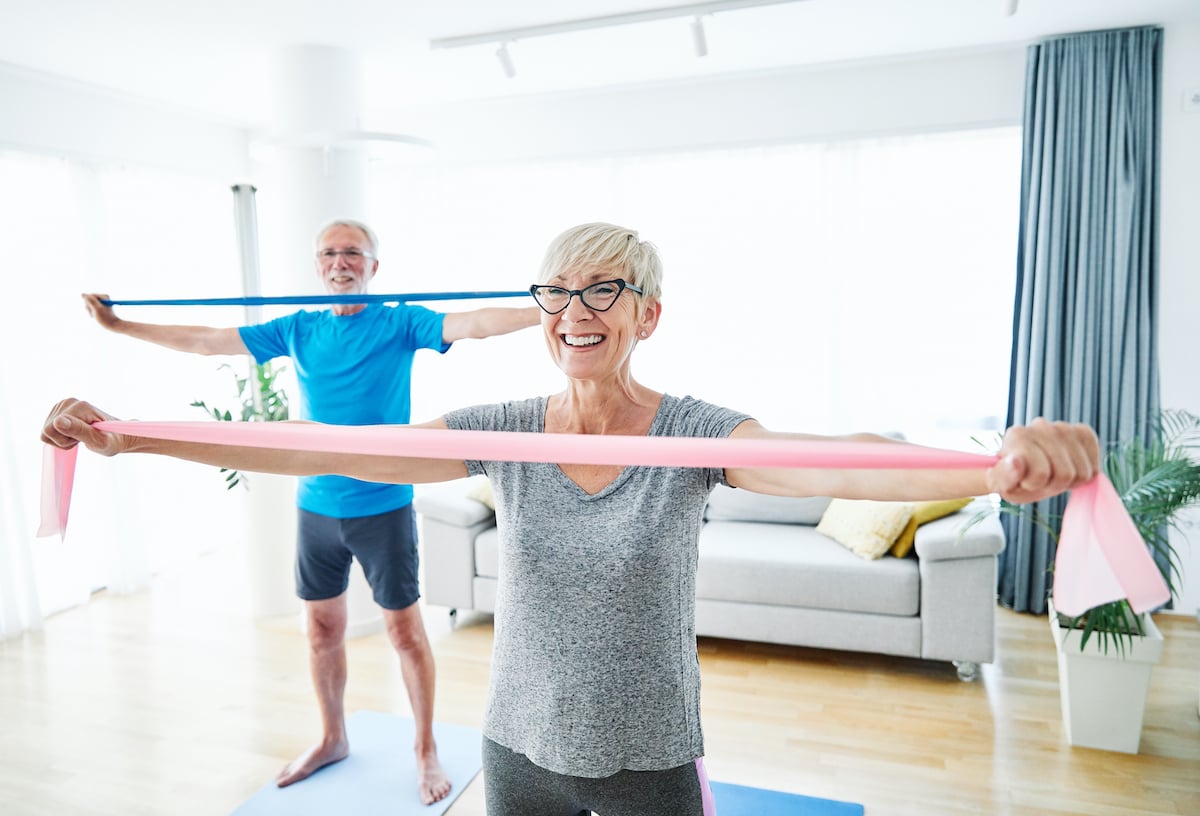
Resistance training does not need to involve heavy weights or gym machines. In this context, it simply means moving the body against some form of gentle resistance—enough to encourage muscles and bones to stay strong.
When combined with other forms of movement, light resistance work can help support posture, everyday strength, and confidence, while still feeling safe and manageable. The goal is not intensity, but variety and consistency, allowing the body to stay capable in different ways.
Redefining Strength
Strength does not have to mean heavy weights or gym workouts. At this stage of life, strength can be:
- Gentle
- Controlled
- Low-impact
- Done at home
The focus is not on pushing boundaries but feeling good whilst benefiting your health!
Mental Benefits
Staying active supports mental wellbeing just as much as physical health. Regular movement has been shown to lift mood, reduce everyday stress, and build confidence over time. It also creates a sense of routine and purpose, which becomes increasingly important as life rhythms change.
When women feel capable and steady in their bodies, it often carries over into how they feel mentally—more positive, more independent, and more confident in daily life.
Starting Later
It is never too late to begin resistance training, even if you have not exercised regularly in the past.
Many women who introduce gentle, strength-focused movement later in life notice meaningful improvements in how their bodies feel and move. Everyday tasks such as walking, standing, and maintaining balance often become easier as muscles regain strength and coordination.
Resistance training is particularly well suited to starting later in life because it can be adapted to your current ability. Movements can be slow, controlled, and low impact, allowing the body to build strength without feeling overwhelmed or strained. Over time, this type of training supports mobility, balance, and confidence—all essential for maintaining independence.
The most important step is starting gradually and choosing resistance-based movement that meets your body where it is today.
Final Thoughts
Aging well is not about pushing harder or doing more. It’s about choosing movement that supports your body wisely and fits your stage of life. Resistance training plays an important role in this approach because it helps support the things that matter most as we age, including:
- Maintaining muscle strength needed for everyday tasks
- Supporting bone health and reducing fracture risk
- Improving balance and stability
- Making daily movement feel easier and more confident
- Helping preserve independence over time
When resistance-focused exercise is done gently and consistently, it can be a safe and effective way for women over 60 to stay active without unnecessary strain. The emphasis is not on intensity, but on control, consistency, and support.
Strength is not defined by age or by how much you lift. It’s about giving your body the right kind of resistance to help it keep moving forward.