


BP: George Thompson, Journey Step: Awareness, Head: rising interest rates, Tail: real estate investing; cap rates
"This content is part of a student project at UCLA Extension. Any logos used might be slightly changed to indicate that this document is NOT a communication from the company represented by the changed logo. Any statements made in this content are the statements of the UCLA student and not of any company. This statement is made so that any reader will understand this document is part of a UCLA student project and NOT a communication from any existing company."
With interest rates rising, real estate can still be a “safe bet”—but only if you track the right signals and stress-test deals with discipline. If you’re a high-income buyer (especially someone balancing a demanding job and limited time), the goal is not to win a debate about whether rates are “good” or “bad.” The goal is to make decisions that protect capital, avoid avoidable risk, and still capture attractive long-term upside.
The headlines can feel chaotic: rate hikes, market corrections, economic uncertainty, and constant hot takes. Yet many sophisticated investors still view real estate as one of the most reliable asset classes for preserving and growing wealth. The question isn’t whether rates matter. It’s this:
What exactly do higher rates change—and what remains fundamentally durable?
By the end of this post, you’ll have a simple framework for deciding whether a deal is “safe” in today’s market and a short watchlist of signals that actually matter.
Important definition: “Safe” doesn’t mean values never drop. It means the investment can survive stress (higher costs, slower demand, softer rents) and still perform in a way that supports your wealth-building goals.
Why Rising Rates Change the Real Estate Game (and What They Don’t Change)
Rising interest rates shift real estate through three main channels. These channels explain why buyers get more selective, why sellers resist price cuts, and why the market often feels slower even before prices visibly adjust.
1) Affordability: Higher payments shrink the buyer pool
When mortgage rates rise, the same house becomes more expensive on a monthly basis. That reduces how many buyers qualify and how aggressively they can bid. Even high earners notice the difference because the payment jump can be large enough to change priorities (bigger down payment vs. different location vs. renting longer).
Higher rates raise the discount rate investors implicitly use. In plain language: if low-risk alternatives yield more, a property must offer stronger returns to compete. That can push cap rates upward (especially for assets where income is the main driver of returns).
3) Market speed: Volume slows and pricing becomes “sticky”
A higher-rate environment often reduces transaction volume. Homes take longer to sell, negotiations take longer, and pricing adjusts in steps rather than instantly. Many sellers anchor to last year’s comps, and buyers want today’s math.
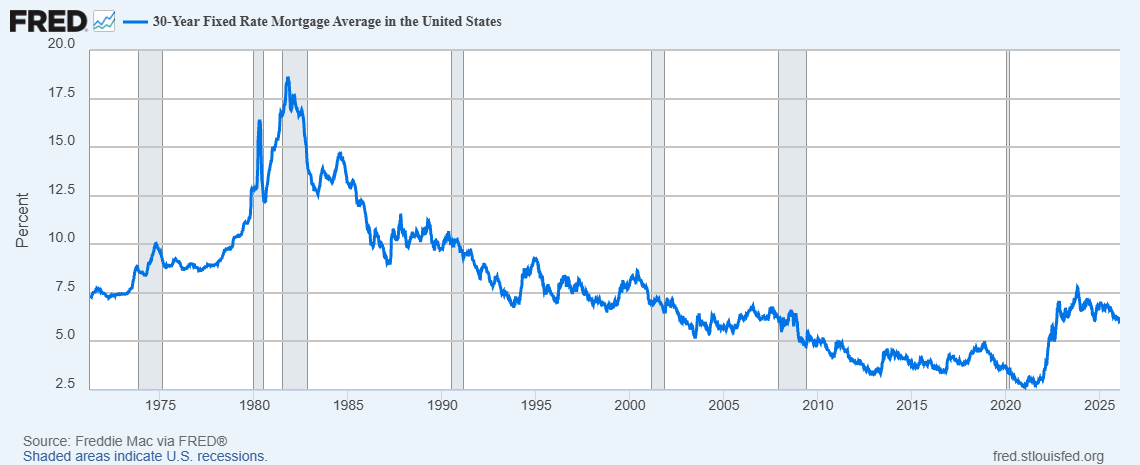
An example of how financial math is affected by high interest
Assume a $1,000,000 property with an $800,000 mortgage on a 30-year fixed loan. Your monthly payment includes principal + interest (P&I). Early in the loan, most of that payment is interest, and the principal portion is smaller.
-
At 3%, monthly P&I ≈ $3,373
-
At 7%, monthly P&I ≈ $5,322 (about 58% higher)
That change is not psychological—it’s mechanical. To keep the payment similar, the buyer needs a bigger down payment, the price must adjust, or the property must produce enough income to justify the higher carrying cost. That’s why rates directly influence pricing—even if the adjustment happens slowly.
If you want the principal vs. interest split (first month, approximate):
-
At 3%, first-month interest ≈ $2,000 (800,000 × 0.03/12), so first-month principal ≈ $1,373.
-
At 7%, first-month interest ≈ $4,667 (800,000 × 0.07/12), so first-month principal ≈ $655.
Higher rates raise the payment and can reduce early principal paydown. That combination makes buyers more price-sensitive and forces deals to be underwritten more conservatively.
What “Safe” Really Means for High-Income Buyers
Real estate feels safer than many assets because it’s tangible and (to an extent) controllable. That intuition has merit. You can select the location, improve the property, optimize operations, and create value in ways you can’t with many purely financial assets.
Still, the key upgrade in thinking is this:
Real estate isn’t automatically safe—individual deals can be safe if you structure them that way.
A resilient deal is built on three layers:
1) Cash flow resilience
The property generates income that can hold up during slower markets. It does not require perfect conditions to “work.”
2) Downside protection
You build a cushion using conservative assumptions and enough equity so that adverse scenarios don’t create financial distress.
3) Exit flexibility
You have more than one viable path out (or through): hold and rent, sell to an end-user, sell to another investor, or refinance when conditions improve.
Here’s the important shift: instead of asking “Is real estate safe?” you ask “Is this specific deal structured safely?” That’s the difference between investing and guessing—especially when rates move.
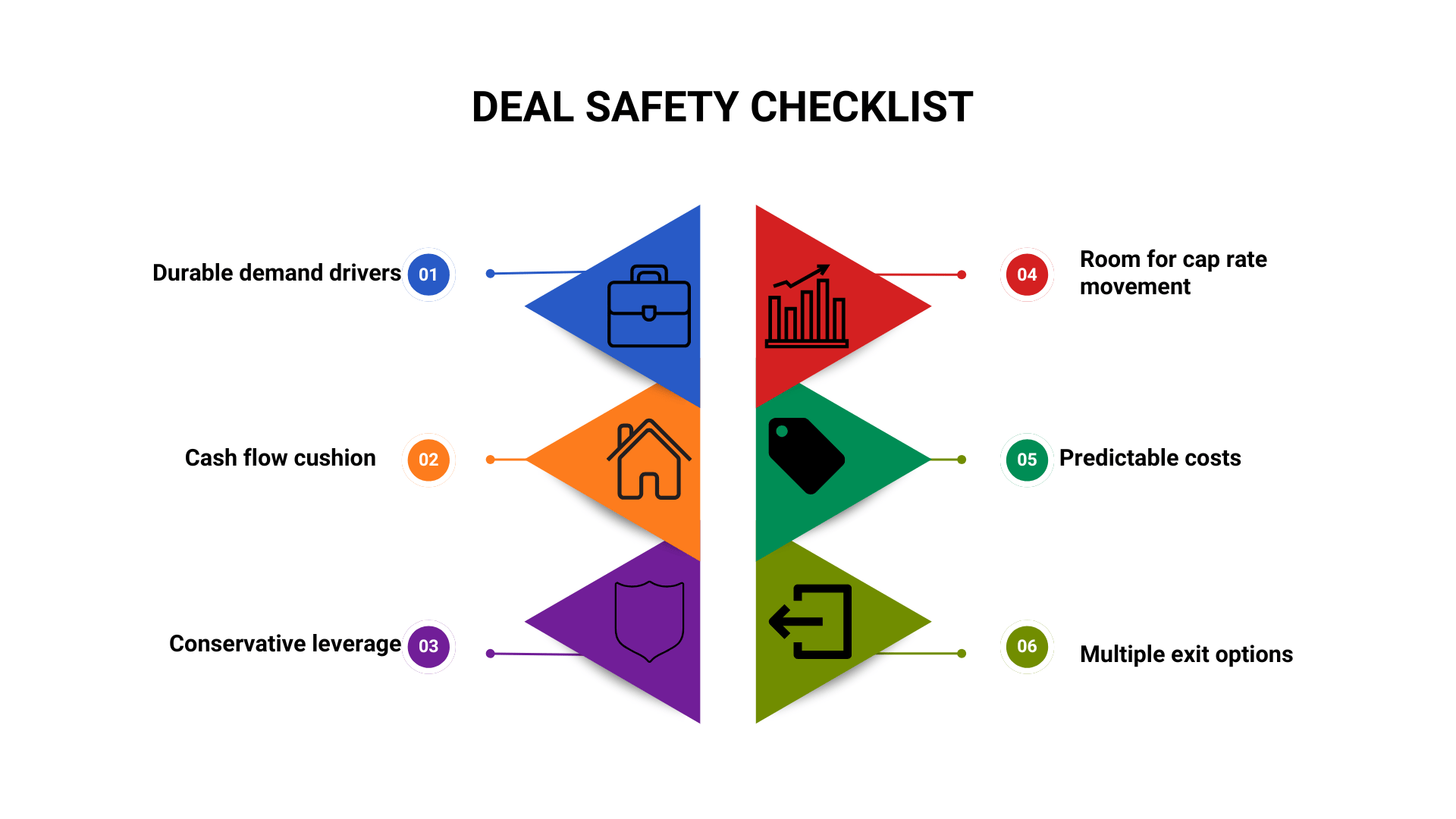
What a “safe” deal usually has (stress-test list)
-
Durable demand drivers (jobs, schools, transit, lifestyle amenities)
-
Room for cap rates to move without breaking the return
-
Conservative leverage (you can refinance later; you can’t undo bad debt)
-
A clear management plan so the investment doesn’t become a time drain
-
More than one realistic exit option
-
Predictable costs (taxes/insurance/HOA) with fewer surprise spikes
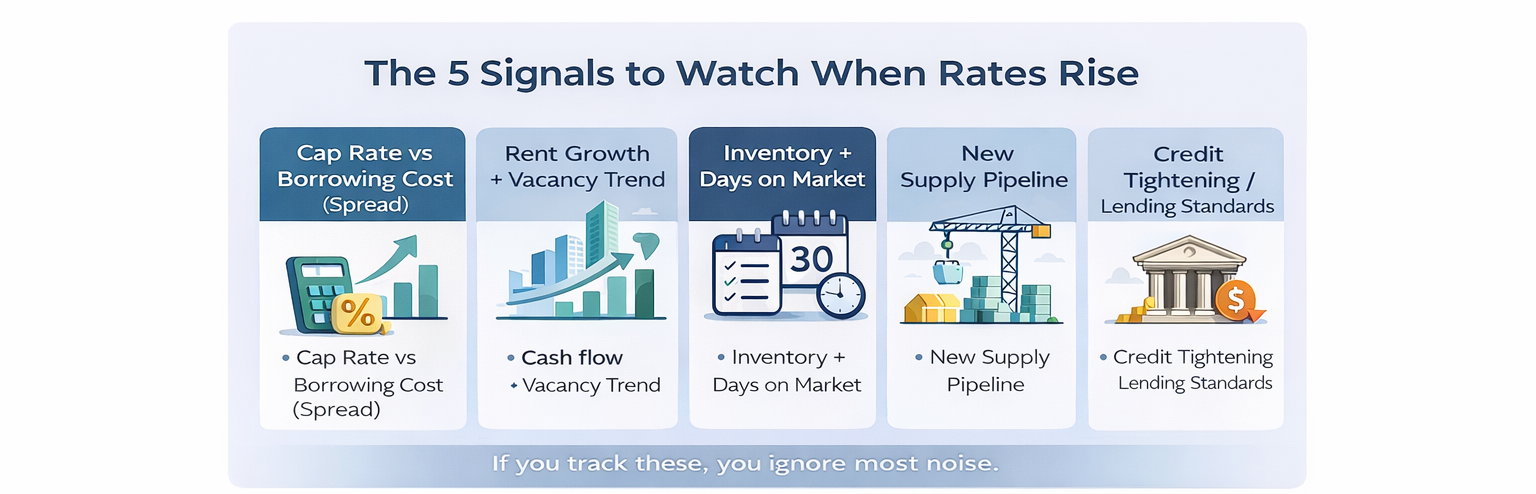
The Signals to Watch Right Now (the short list that matters)
You don’t need 30 indicators. You need a few high-signal metrics that directly affect deal safety and performance. Here’s the short list that matters most for high-income buyers who want strong returns without unnecessary complexity.
1) Cap rates vs borrowing costs (the spread)
Deals are easier when cap rates are comfortably above debt costs. When the spread compresses—or flips—you must rely more on income growth, operational improvements, or lower leverage to make returns work.
What this means in practice:
If the deal only works if rates drop soon, that’s not a strategy—it’s a bet. A safer approach is requiring the deal to work under today’s conditions (or demanding a better price/terms).
2) Rent strength and vacancy
In a high-rate environment, cash flow matters more than “appreciation stories.” Look at rent comps, vacancy trends, tenant demand, and the quality of local demand drivers.
Practical move: underwrite rent conservatively and include vacancy/maintenance reserves. Don’t build a “perfect world” model.
3) Inventory and days on market
Rising inventory and longer days on market can signal softening demand. That can create opportunity—but it also means your exit timeline may be longer, and price discovery may be slower.
Practical move: assume more negotiation, more concessions, and more time.
4) Supply pipeline (new construction and zoning)
Markets with supply constraints (geography, zoning, high build costs) tend to be more stable. Markets with heavy pipelines can experience oversupply, which pressures rents and prices—especially if new units target your same buyer/tenant segment.
5) Credit conditions (lending standards)
When lenders tighten underwriting or reduce loan-to-value, fewer buyers qualify and liquidity drops. That changes negotiation leverage and time-to-exit.
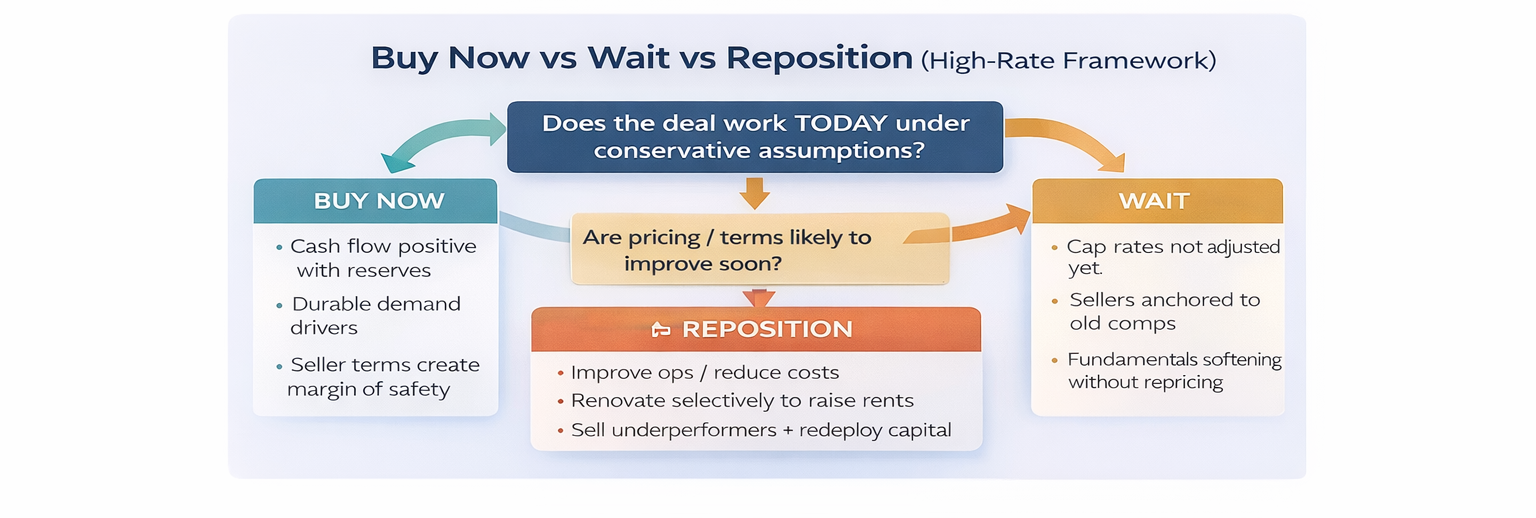
Once you know what to watch, the next question is what to do—buy now, wait, or reposition.
A Decision Framework: Buy Now vs Wait vs Reposition
High-income investors don’t need “always buy” or “always wait” advice. They need a framework that reduces emotional decisions and keeps underwriting consistent.
Buy now when…
You find deals where:
-
The numbers work today under conservative assumptions
-
The seller is motivated and terms are favorable
-
You’re not relying on near-term appreciation to justify the purchase
-
You have a real edge (market knowledge, sourcing, operational capacity)
A “buy now” decision is strongest when the property has a margin of safety (price/terms) and durable demand drivers. In many markets, the best opportunities appear when the crowd is uncertain and deal volume slows—if you stay disciplined.
Wait when…
-
Pricing still reflects low-rate assumptions
-
Cap rates haven’t adjusted but borrowing costs have
-
Fundamentals are weakening and sellers aren’t budging yet
-
You lack reserves for a longer hold or near-term volatility
Waiting is not “doing nothing.” It’s preserving optionality and preparing to move quickly when pricing and terms align with today’s reality.
Reposition when…
Sometimes the best move is improving your existing portfolio rather than acquiring new assets:
-
Improve operations and reduce avoidable costs
-
Renovate strategically to raise rents (without over-improving)
-
Sell underperformers and redeploy capital into stronger deals
-
Strengthen management systems to reduce the time burden
Quick decision questions (4–6 bullets)
-
If cap rates rise further, does the deal still work?
-
If rent drops or vacancy rises, do you still cash flow?
-
Are expenses realistic (tax/insurance/HOA/maintenance + reserves)?
-
Does this improve diversification—or concentrate risk?
-
Do you have at least two viable exit paths?
-
Will this require hands-on work you don’t have time for?
How to Reduce the “Headache Factor” Without Killing Returns
For high-income professionals, operational burden matters as much as return. The goal is not maximum theoretical return—it’s strong returns that don’t consume your time and attention.
A common mistake is chasing marginally higher returns in assets that require constant involvement. Over time, the “headache factor” becomes a real cost—time, stress, distraction, and slower decision-making in your core career.
What lowers headache risk
-
Professional management with clear reporting and performance tracking
-
Properties with predictable maintenance profiles (often newer builds)
-
Cost visibility (insurance, taxes, HOA rules)
-
Systems: reserves, contractors lined up, standard procedures
Operational “headache-proof” checklist (4–6 bullets)
-
Choose management with transparent reporting and a consistent cadence
-
Maintain reserves for repairs and vacancy (don’t run thin)
-
Verify recurring costs before committing (especially insurance/taxes/HOA)
-
Avoid overly unique features that limit future buyer demand
-
Build an exit plan before closing (not when the market turns)
-
Prefer assets with stable tenant demand and simpler operations
Conclusion: A Simple Checklist Before You Make a Move
Real estate can still be a safe bet in a rising-rate environment—but safety is something you engineer through conservative assumptions, disciplined underwriting, and operational planning.
Before you buy, confirm:
-
Cash flow resilience
-
Downside protection (equity cushion + stress tests)
-
Location fundamentals
-
Exit flexibility
-
A realistic operations plan
Answer to the question:
Yes—real estate can still be “safe” with rising rates if you track the right signals (cap rates, rent strength, supply, and credit) and stress-test the deal so you’re not relying on hope.